
Impact of Glycemic Variability and Body Composition on Cardiovascular Burden in Type 2 Diabetes
This study investigates the impact of HbA1c variability and body composition on cardiovascular disease (CVD) risk in individuals with type 2 diabetes mellitus (T2DM). Using electronic medical records from Kyung Hee University Medical Center in South Korea spanning 2008–2022, the researchers conducted a retrospective cohort analysis of 8,224 adults diagnosed with T2DM who had no prior history of CVD. The analysis calculated each patient’s HbA1c Variability Score (HVS) alongside body composition metrics including skeletal muscle mass and body fat percentage. Cox proportional hazards models were then employed to assess the associations between glycemic variability, body composition, and CVD incidence.
The findings reveal that both pronounced glycemic fluctuations and unfavorable body composition serve as independent risk factors for CVD. After adjusting for multiple clinical confounders, the high HVS group demonstrated a significantly elevated CVD risk of approximately 70% (adjusted hazard ratio [aHR] 1.70). Conversely, higher appendicular skeletal muscle mass exhibited a substantial cardioprotective effect (aHR 0.75), while increased body fat percentage was associated with heightened risk (aHR 1.10). Furthermore, the data indicate that elevated HVS correlates with reduced muscle mass and increased fat mass, suggesting that chronic glycemic instability may synergistically exacerbate cardiovascular burden alongside deteriorating body composition.
This study advances beyond the conventional approach of assessing CVD risk solely through mean HbA1c levels by integrating “metabolic variability” and “body composition” within a unified model. This integrated framework enables more precise risk stratification and underscores the importance of multidisciplinary integration in diabetes care. The findings have been published in the internationally renowned journal Journal of Cachexia, Sarcopenia and Muscle (Kim S, et al., J Cachexia Sarcopenia Muscle. 2025 Aug;16(4):e70028).
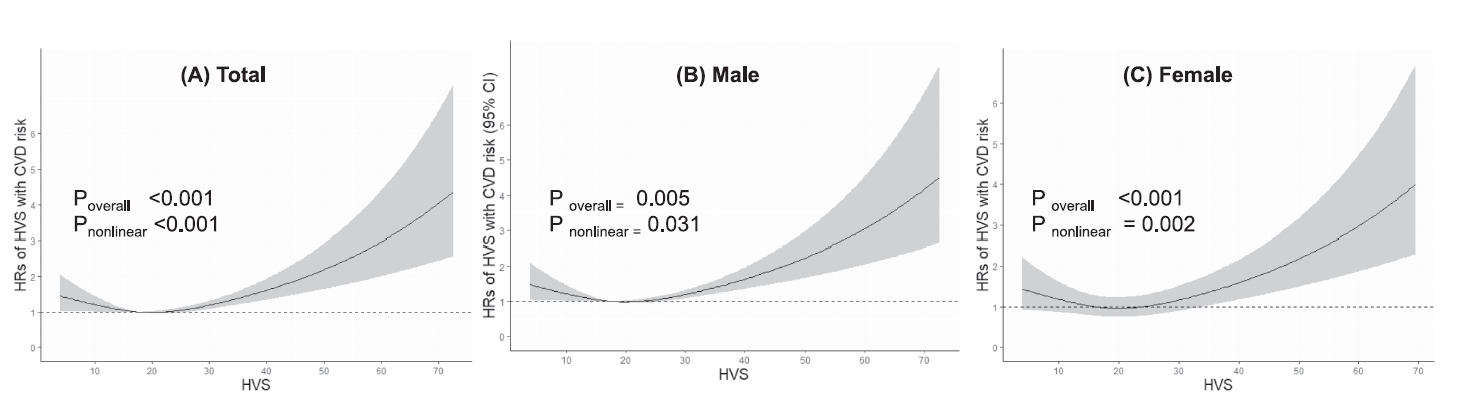
Figure, Nonlinear dose–response relationship between HbA1c variability and cardiovascular disease risk, stratified by sex”
