
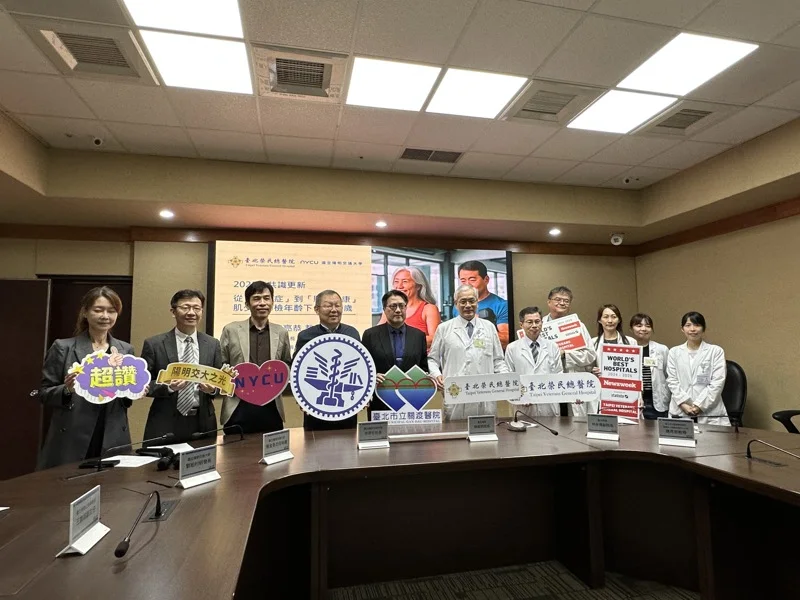
2025.12.01 Asian Sarcopenia Diagnostic Consensus Published in 《Nature Aging》, Advancing Screening Age from 65 to 50 Years for the First Time
In response to Taiwan’s impending transition into a super-aged society, the Asian Working Group for Sarcopenia (AWGS) officially released its latest diagnostic consensus on December 1, 2025, with the findings published in the prestigious international journal Nature Aging. This journal has traditionally focused on publishing research in aging science and fundamental studies, rarely featuring clinical guidelines or diagnostic consensus documents for specific diseases. The inclusion of the AWGS diagnostic consensus demonstrates the international academic community’s profound recognition of this innovative diagnostic framework and research approach, while also highlighting the significance of Asian perspectives in global geriatric medicine research.
The diagnostic consensus was led by Professor Liang-Kung Chen, Superintendent of Taipei City Hospital Guandu Branch and Director of the Center for Healthy Longevity and Aging Sciences at National Yang Ming Chiao Tung University, integrating expertise from multiple Asian countries including Japan, South Korea, Singapore, Thailand, and Hong Kong. The consensus synthesized data from eight large-scale Asian cohort studies involving long-term follow-up of nearly thirty-five thousand participants, establishing a rigorously evidence-based diagnostic framework that reflects the unique characteristics of Asian populations. Research findings revealed significant differences between Asian and Western populations in body composition, muscle mass, and muscle strength changes, underscoring the necessity of developing Asia-specific diagnostic consensus.
One of the most groundbreaking adjustments in the new consensus is the advancement of sarcopenia screening age from sixty-five to fifty years old for the first time, clearly indicating that muscle function decline begins as early as midlife and establishing middle age as a critical intervention period. This change facilitates earlier identification of high-risk populations and reduces future risks of falls, disability, and chronic diseases. Furthermore, the consensus simplifies the diagnostic process by clearly defining sarcopenia as requiring both low muscle mass and low muscle strength simultaneously, while repositioning physical performance measures such as gait speed and the five-times sit-to-stand test as tools for disease prognosis and risk assessment, thereby enhancing clinical applicability and consistency.
More importantly, this consensus no longer centers solely on disease diagnosis but advances a new framework for muscle health promotion based on the life-course approach, emphasizing skeletal muscle as a core organ for healthy longevity with close cross-system interactions involving the brain, bones, adipose tissue, and immune system. This perspective aligns with the World Health Organization’s Integrated Care for Older People (ICOPE) framework, emphasizing the integration of resistance exercise, nutritional interventions, and personalized care strategies to provide actionable directions for Asian countries facing population aging challenges.
The release of this diagnostic consensus and its publication in Nature Aging repositions the role of sarcopenia in research and clinical management, extending from passive disease diagnosis to proactive, forward-looking muscle health promotion strategies with profound implications for Asian clinical practice, public health policy, and healthy aging initiatives. This represents one of the rare disease diagnostic consensuses led by Taiwan that has successfully garnered recognition from a top-tier international journal, demonstrating Taiwan’s research integration capabilities and academic leadership on critical issues in geriatric medicine, while establishing an important foundation for future international collaboration and industry-academia research and development.
